

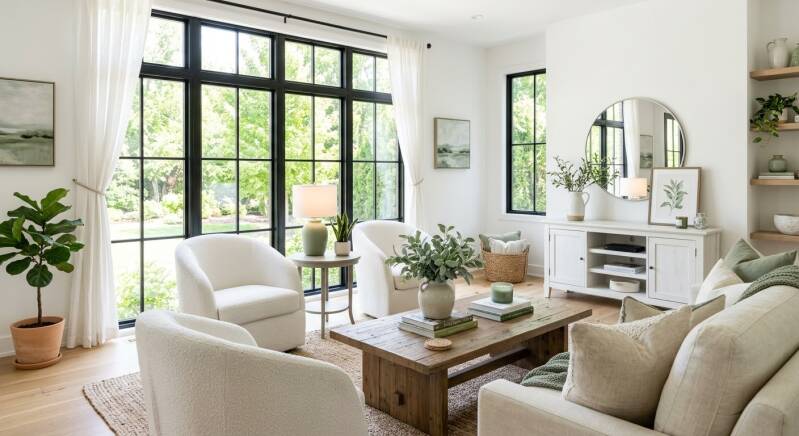
Merchandising a space in home staging means presenting each room in a way that helps buyers understand its purpose, scale, and potential. The goal is not to decorate for the current owner’s taste; it is to create a polished, welcoming setting that appeals to a broad audience. Start by decluttering and depersonalizing the room. Remove excess furniture, family photos, collections, and oversized décor so the space feels open and easy to navigate. Then define the room’s function with appropriately sized furnishings.
For example, stage an empty bedroom as a bedroom rather than a storage area, or use a small desk and chair to show how an unused nook can serve as a home office. Arrange furniture to support natural traffic flow and highlight useful features such as windows, fireplaces, built-in shelving, or architectural details. Add warmth through neutral textiles, simple artwork, fresh linens, and a few carefully chosen accessories.
Lighting is especially important: open window coverings, replace burned-out bulbs, and use layered lighting where possible to make the room feel bright and inviting. Keep surfaces clean and styled with restraint—a bowl of fruit in the kitchen, folded towels in the bathroom, or a throw blanket on the sofa can suggest comfort without creating visual clutter.
Artwork and decor play an important role in merchandising a space because they help buyers imagine how a home can feel, not just how it functions. Choose pieces that support the style of the property while keeping the overall look neutral, polished, and broadly appealing. Large-scale artwork can define blank walls and add visual interest without creating clutter, while mirrors can reflect light and make smaller rooms feel more open. Use decor selectively: a few well-placed accessories, such as books, greenery, pillows, or sculptural objects, can add warmth and texture. Avoid overly personal items, busy collections, controversial imagery, or decor that distracts from key architectural features. The goal is to create a cohesive, inviting environment that highlights the room’s scale, flow, and potential. Effective merchandising helps buyers form an emotional connection to the home while allowing them to imagine their own lives within it.
Add comment
Comments