

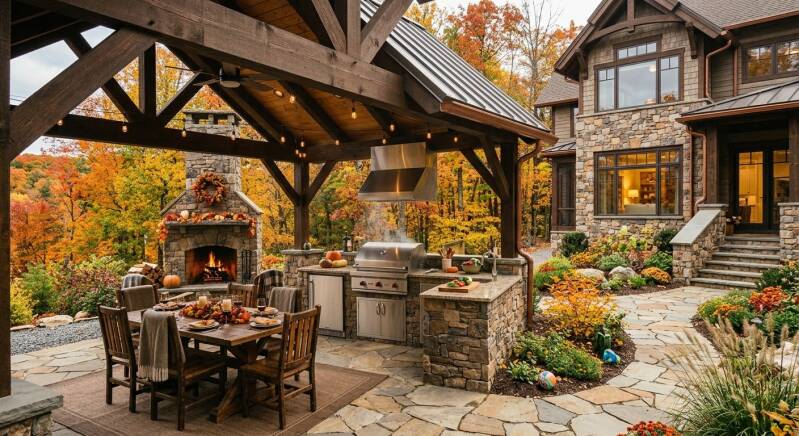
Before beginning an outdoor kitchen project in the fall, ask yourself a few practical questions to avoid weather-related delays and costly changes.
What is my budget, including permits, utility work, appliances, and unexpected site conditions? Outdoor kitchens often require more than cabinetry and a grill; gas, electrical, plumbing, drainage, lighting, and a stable foundation can significantly affect the final cost.
Is there enough time to complete the project before winter weather arrives? Cooler temperatures, rain, frozen ground, and shorter daylight hours may limit excavation, concrete work, masonry, and installations, depending on your location.
What permits and inspections are required? Contact your local building department early, especially if you plan to add gas lines, electrical circuits, plumbing, roofing, or permanent structures.
Where should the kitchen be located? Consider wind direction, smoke, sun exposure, privacy, access to the house, views, and safe clearance from doors, windows, property lines, and combustible materials.
Which materials can handle my climate? Choose weather-resistant cabinets, countertops, appliances, and finishes designed for outdoor use, and plan for freeze protection if your area experiences cold winters.
How will utilities be protected and maintained? Water lines may need to be drained or winterized, while gas and electrical connections should be installed by qualified professionals.
Will the layout support how I cook and entertain? Include adequate prep space, storage, seating, lighting, waste disposal, and room for guests to move safely around hot cooking areas.
Finally, ask who will manage the project and what is the backup plan for poor weather? A clear timeline, reliable contractor, and realistic plan for seasonal interruptions can help your outdoor kitchen get off to a strong start in the fall.
Add comment
Comments